



Die SIB-Ausbildungsgruppe stellt sicher, dass die Schweiz in den zunehmend datenintensiven Lebens- und Gesundheitswissenschaften über hochqualifizierte Arbeitskräfte verfügt. Dazu organisieren wir Trainingskurse und fördern internationale Kooperationen. Auf dieser Seite erfahren Sie auch, wen wir trainieren und wie wir unser Training durchführen offen und FAIR.
Konzentration auf die Mission der Gruppe
Die SIB Training-Gruppe unter der Leitung von Patricia Palagi koordiniert das Training und Kursangebot des Instituts im Bereich Bioinformatik. Durch ihre Aktivitäten stellt sie sicher, dass die nächste Generation von Bioinformatikern und Lebenswissenschaftlern die neuesten Fortschritte in der computergestützten Biologie optimal nutzen kann.

Unsere einzigartigen Kurse für Forscher ergänzen die Lehre an Schweizer Universitäten, insbesondere im Bereich der Datenanalyse, und unsere FAIR*-Training-Materialien unterstützen andere Ausbilder weltweit.
Bioinformatics courses and resources across the life sciences
The SIB Training group offers courses and learning resources designed to complement teaching at Swiss universities and meet the evolving bioinformatics needs of life-science professionals across academia, healthcare and industry—from PhD candidates and postdoctoral researchers to senior researchers and health professionals.
Our training activities also foster networks and collaborations across Switzerland, Europe and beyond. Explore our ongoing partnerships and the resources below to find the training opportunities that best match your needs.
Annual key figures
60
courses
1,405
participants
86
trainers from the SIB network
Expert trainers from all areas of bioinformatics
SIB comprises a large national network of expertise across all domains of the computational life sciences. Our bioinformatics courses are developed and delivered with and for this network, by the Training group, SIB members across Switzerland, and other national and international experts.
The Training Advisory Committee (TAC) consists of SIB Group Leaders who guide strategic choices and help define our long-term roadmap.
Beratungsausschuss für Training
Im Trainingskomitee werden die strategische Ausrichtung und das Konzept der Trainingsaktivitäten diskutiert und beschlossen. Es setzt sich aus den SIB-Gruppenleitern zusammen, die am meisten mit Trainingsaktivitäten befasst sind, nämlich:
- Pedro Beltrao
- Rémy Bruggmann
- Marek Basler (Unibas)
- Alessandro de Simone (UNIGE)
- Christophe Dessimoz
- Pierre Farmer (Novartis)
- Mark Ibberson
- Raphaelle Luisier
- Patricia Palagi
- Mark Robinson
- Frédéric Schütz (Vorsitzender)
- Thierry Sengstag
- Vincent Zoete
Our impact at a glance
From Switzerland to beyond, SIB Training helps life-science professionals at every career stage build their bioinformatics skills. Explore our reach and impact through the numbers.
Since 2017:
- > 500 courses
- > 12,000 participants
In 2025:
- 87.7% of participants would recommend the course
- 111 course days
- 31 courses in person/29 streamed (pie chart)
Two ways to learn
A community at every career stage
Connecting learners across borders
Why take an SIB course?
Today, there are many ways to learn: video tutorials, e-learning modules, AI chatbots. These are valuable resources, and SIB offers many of them too. A course adds something they cannot: direct interaction with experts and peers, guided practice, and time set aside to focus. It is a solid foundation for building bioinformatics skills and a real step forward in your career.

The SIB courses have equipped me with state-of-the-art skills that have boosted my work and ultimately contributed to the development of my thesis. In my opinion, the main advantage of the courses is their hands-on focus, and as a result, I have left every course with a clear view of what I can achieve using the acquired skills...
Everyone in the group has attended at least one SIB course... The positive impact on our work is clear and I believe it’d have been very challenging to properly train our people without the courses offered by SIB
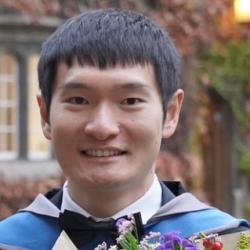
I had the pleasure of participating in SIB courses on transcriptomics analyses that are pertinent for my PhD project... The skills I developed improved my understanding for the omics experiments both theoretically and practically with the programming, while expanding my professional network...

The SIB courses have been extremely valuable for my research, particularly the advanced statistics course... The trainers are highly supportive, and the well-structured exercises encourage independent learning. I am grateful for the high-quality teaching and the impactful learning experience and I would definitively recommend!
Learn at your own pace, share knowledge openly
Continue learning whenever and wherever it suits you. Explore our course materials, watch presentations on YouTube or follow our e-learning modules.
We also believe training materials should be as open and reusable as research data. That's why we apply Open Research Data best practices and the FAIR principles (Findable, Accessible, Interoperable and Reusable) to our resources. We also help others do the same by collecting and annotating community resources on glittr.org and contributing to community standards.
Our goal: make training resources easier to find, reuse and share, supporting more open and collaborative science.
In 2025:
- 59 courses with openly available materials
- > 48,000 unique visitors to course materials
- 105,297 views of recorded lectures
- > 800 Open & FAIR materials in Glittr.org
National and international partnerships


The SIB PhD Training Network specifically supports PhD students in Switzerland carrying out research in bioinformatics or computational biology.
To serve the needs of health professionals specifically, we collaborate with the Basel and Lausanne University Hospitals and Basel University to deliver a Certificate of Advanced Studies (CAS) in Personalized Molecular Oncology.
Get in touch
- See specific information on upcoming courses.
- Subscribe to our mailing list to never miss a course.
- Contact @email or a Training group member personally for any questions on our courses, partnerships, and other activities – and to inquire about specific training that is not in our public course portfolio.
- Article: Strengthening bioinformatics education: e-learning initiatives across ELIXIR Nodes and Communities. Zahn-Zabal, M. et al. F1000Res; 2025.
- Report: Action line B5.4 of the action plan on Open Research Data: Establish ORD expertise (e.g. data stewardship) as an independent career path at HEIs by 2028. Bellanger, S.et al. swissuniversities; 2025.
- Report: PeoplePulse CoS | WP2 | M2.2 ELIXIR Onboarding Protocol. Golobardes Vilarasau, A. et al. Zenodo; 2025.
- Report: Data sharing and reuse under GDPR - BY-COVID Fest workshop report. Saldner, S. et al. Zenodo.
- Report: BY-COVID D6.2 Training efforts report. Palagi, P. et al. Zenodo.
- Article: Using Glittr.org to find, compare and re-use online materials for training and education. van Geest G. et al. PLoS ONE 19(12): e0308729.
- Article: The ELIXIR Biodiversity Community: Understanding short- and long-term changes in biodiversity. Waterhouse, R. et al. F1000Res. 2024 May 22;12:ELIXIR-499.
- Article: A research data management (RDM) community for ELIXIR. D'Anna, F. et al. F1000Res; 2024.
- Article: ELIXIR fair training handbook. Holinski, A. et al. Zenodo; 2024. Read the news
- Article: Bioschemas training profiles: A set of specifications for standardizing training information to facilitate the discovery of training programs and resources. Castro LJ. et al. PLoS Comput Biol. 2023.
- Article: Grand challenges in bioinformatics education and training. Büşra Işık, E. et al. Nat Biotechnol. 2023.
- Article: An international consensus on effective, inclusive, and career-spanning short-format training in the life sciences and beyond. Williams, J. et al. PLoS One. 2023.
- Article: Beyond COVID - how the BY-COVID project is increasing European pandemic preparedness. Lauer, K. et.al (2023). Zenodo.
- Article: Ten simple rules for writing a PLOS Computational Biology quick tips article.Palagi PM, Schwartz R, Markel S, Ouellette BFF (2023). PLoS Comput Biol 19(12): e1011689.
- Article: Community-driven ELIXIR activities in single-cell omics. Czarnewski P, Mahfouz A, Calogero RA et al. Community-driven ELIXIR activities in single-cell omics [version 1; peer review: awaiting peer review]. F1000Research 2022, 11(ELIXIR):869
- Article: Ten simple rules for good research practice. Simon Schwab, Perrine Janiaud, Michael Dayan, Valentin Amrhein, Radoslaw Panczak, Patricia M. Palagi, Lars G. Hemkens, Meike Ramon, Nicolas Rothen, Stephen Senn, Eva Furrer, Leonhard Held. PLoS Computational Biology, 2022 June 23.
- Article: Ten simple rules in good research practice for early career researchers. Simon Schwab, Perrine Janiaud, Michael Dayan, Valentin Amrhein, Radoslaw Panczak, Patricia Palagi, Lars M. Hemkens, Meike G. Ramon, Nicolas Rothen, Stephen Senn. 2021,OSF Preprint.
- Article: ELIXIR‐EXCELERATE: establishing Europe's data infrastructure for the life science research of the future. Jennifer Harrow, John Hancock, Niklas Blomberg, Søren Brunak, Salvador Capella‐Gutierrez, Christine Durinx, Chris T Evelo, Carole Goble, Ivo Gut, Jon Ison, Thomas Keane, Brane Leskošek, Luděk Matyska, Johanna McEntyre, Célia Miguel, Arcadi Navarro, Steven Newhouse, Tommi Nyrönen, Patricia Palagi, Bengt Persson, Cyril Pommier, Jordi Rambla, Marco Roos, Gabriella Rustici, Andrew Smith, Alfonso Valencia, Celia van Gelder, Jiri Vondrasek, Nils Peder Willassen, Juan Arenas, Helen Parkinson, Robert D Finn, Sergi Beltran, Leslie Matalonga, Hannah Hurst, Paul Kersey, Ilkka Lappalainen, Pascal Kahlem, Gary Saunders, Sirarat Sarntivijai, Rachel Drysdale, Johnathan Tedds, Jeremy Lanfear. The EMBO Journal,40, 6, e107409, 2021.
- Report: Copyright Guidelines - How to acknowledge and be acknowledged in training material. Frédéric Schütz, Clement Parisato, Valeria Di Cola, Monique Zahn, Patricia M. Palagi. 2021 November 29.
- Presentation: Making training materials FAIR experiences, challenges, solutions. Saskia Hiltemann, Anna Swan, Verena Ras, Maria Doyle, Melissa Burke, Patricia M. Palagi, Celia W.G van Gelder. 2021 July 25.
- Presentation: Open and FAIR in bioinformatics and training. Patricia M. Palagi. 2021 March, Open Science Zurich, 04 March 2021, online.
- Report: Lessons learned when moving SIB Training courses from in-person to online – anything in bioinformatics can be taught online, but not anyhow. Patricia M. Palagi. 2020 September 17.
- Article: Biocuration - mapping resources and needs. Alexandra Holinski, Melissa L. Burke, Sarah L. Morgan, Peter McQuilton, Patricia M. Palagi. 2020 September 04.
- Article: Clinical bioinformatics for microbial genomics and metagenomics: an ESCMID Postgraduate Technical Workshop. Gilbert Greub, Patricia M. Palagi, David Dylus, Adrian Egli, Trestan Pillonel, John W. A. Rossen, Helena M. B. Seth-Smith, Aitana Lebrand. 2020 August 22.
- Article: A framework to assess the quality and impact of bioinformatics training across ELIXIR. Kim T. Gurwitz, Prakash Singh Gaur, Louisa J. Bellis, Lee Larcombe, Eva Alloza, Balint Laszlo Balint, Alexander Botzki, Jure Dimec, Victoria Dominguez del Angel, Pedro L. Fernandes, Eija Korpelainen, Roland Krause, Mateusz Kuzak, Loredana Le Pera ,Brane Leskošek, Jessica M. Lindvall, Diana Marek, Paula A. Martinez, Tuur Muyldermans, Ståle Nygård, Patricia M. Palagi, Hedi Peterson, Fotis Psomopoulos, Vojtech Spiwok, Celia W. G. van Gelder, Allegra Via, Marko Vidak, Daniel Wibberg, Sarah L. Morgan, Gabriella Rustici. 2020 July 23.
- Presentation: Applying best practices to enhance bioinformatics training in Switzerland. Diana Marek, Wandrille Duchemin, Isabelle Dupanloup, Grégoire Rossier, Margaux Roulet, Frédéric Schütz, Monique Zahn, Patricia M. Palagi. 2020 July 16.
- Article: Ten simple rules for making training materials FAIR. Leyla Garcia, Bérénice Batut, Melissa L. Burke, Mateusz Kuzak, Fotis Psomopoulos, Ricardo Arcila, Teresa K. Attwood, Niall Beard, Denise Carvalho-Silva, Alexandros C. Dimopoulos, Victoria Dominguez del Angel, Michel Dumontier, Kim T. Gurwitz, Roland Krause, Peter McQuilton, Loredana Le Pera, Sarah L. Morgan, Päivi Rauste, Allegra Via, Pascal Kahlem, Gabriella Rustici, Celia W. G. van Gelder, Patricia M. Palagi. 2020 May 21
- Report: Report on training provided across the ELIXIR community. Attwood Terri, Ben-Avraham Daniel, Beard Niall, Dominguez del Angel Victoria, Fernandes Pedro, Gurwitz Kim, Kahlem Pascal, Korpelainen Eija, Leskošek Brane, Lindvall Jessica, Morgan Sarah, Nygard Stale, Palagi Patricia, Peterson Heidi, Rustici Gabriella, Sansone Susanna-A, Thurston Milo, van Gelder Celia, Via Allegra. 2019 August 23
- Presentation: FAIR Training in ELIXIR Europe. Mateusz Kuzak, Leyla García Castro, Bérénice Batut, Ricardo Arcila, Niall Beard, Melissa Burke, Denise Carvalho-Silva, Victoria Dominguez Del Angel, Kim Gurwitz, Pascal Kahlem, Paula Martinez, Sarah Morgan, Peter McQuilton, Patricia Palagi, Fotis Psomopoulos, Gabriella Rustici, Celia van Gelder. 2019 July 24.
- Presentation: ELIXIR-Training-2018-ELIXIR-CZ-Conference. Celia van Gelder, Patricia M. Palagi, Gabriella Rustici, Pascal Kahlem. 2018 November 24.
- Presentation: Challenges in adopting FAIR principles in Training. Patricia M. Palagi, Pascal Kahlem, Gabriela Rustici, Celia W. G. van Gelder. 2018 October 29.
- Article: A new pan-European Train-the-Trainer programme for bioinformatics: pilot results on feasibility, utility and sustainability of learning. Allegra Via, Teresa K. Attwood, Pedro L. Fernandes, Sarah L. Morgan, Maria Victoria Schneider, Patricia M. Palagi, Gabriella Rustici, Rochelle E. Tractenberg. 2017 September 26.
- Article: The ELIXIR-EXCELERATE Train-the-Trainer pilot programme: empower researchers to deliver high-quality training . Sarah L. Morgan, Patricia M. Palagi, Pedro L. Fernandes, Eija Koperlainen, Jure Dimec, Diana Marek, Lee Larcombe, Gabriella Rustici, Teresa K. Attwood, Allegra Via. 2017 August 24.
- Article: Developing a strategy for computational lab skills training through Software and Data Carpentry: Experiences from the ELIXIR Pilot action. Aleksandra Pawlik, Celia W.G. van Gelder, Aleksandra Nenadic, Patricia M. Palagi, Eija Korpelainen, Philip Lijnzaad, Diana Marek, Susanna-Assunta Sansone, John Hancock, Carole Goble. 2017 Jun 03.
- Article: BioCIDER: a Contextualisation InDEx for biological Resources discovery. Carlos Horro, Martin Cook, Teresa K. Attwood, Michelle D. Brazas, John M. Hancock, Patricia M. Palagi, Manuel Corpas, Rafael Jimenez. Bioinformatics. 2017 Apr 12. doi: 10.1093/bioinformatics/btx213.
- Conference poster: GOBLET Standards Committee: best practices and standards in bioinformatics and biocuration. Maria Victoria Schneider, Teresa K. Attwood, Manuel Corpas, Mike Charleston, Saravanan Dayalan, Pascale Gaudet, Judit Kumuthini, Sarah Morgan, Patricia M. Palagi, Gabriella Rustici. ISB 2017 Mar.
- Report: Defining a lingua franca for the ELIXIR/GOBLET e-learning ecosystem. Teresa K. Attwood, Brane Leskosek, Jure Dimec, Sarah Morgan, Nicola Mulder, Celia W. van Gelder, Patricia M. Palagi. 2016 Nov 13.
- Report: Report on the training needs identified across the ELIXIR community. Celia van Gelder, Sarah Morgan, Allegra Via, Rita Hendricusdottir, Eija Korpelainen, Chris Ponting, Terri Attwood, Patricia Palagi. 2016 Sep 2.
- Article: The SIB Swiss Institute of Bioinformatics' resources: focus on curated databases. SIB Swiss Institute of Bioinformatics Members. Nucleic Acids Res. 2016 Jan 4;44(D1):D27-37. doi: 10.1093/nar/gkv1310. Epub 2015 Nov 28.
Article: GOBLET: The Global Organisation for Bioinformatics Learning, Education and Training
Teresa K. Atwood, Erik Bongcam-Rudloff, Michelle E. Brazas, Manuel Corpas, Pascale Gaudet, Fran Lewitter, Nicola Mulder, Patricia M. Palagi, Maria Victoria Schneider, Celia W. G. van Gelder, and the GOBLET Consortium. PLoS Computational Biology 04/2015; 11(4):e1004143. DOI:10.1371/journal.pcbi.1004143
Mitglieder
Unsere Gruppenmitglieder anzeigen hier


