

AI is only as good as the quality of its data, and Switzerland has a trump card to play: the country’s scientific excellence, quality, reliability, and cooperation represent enormous competitive advantages.
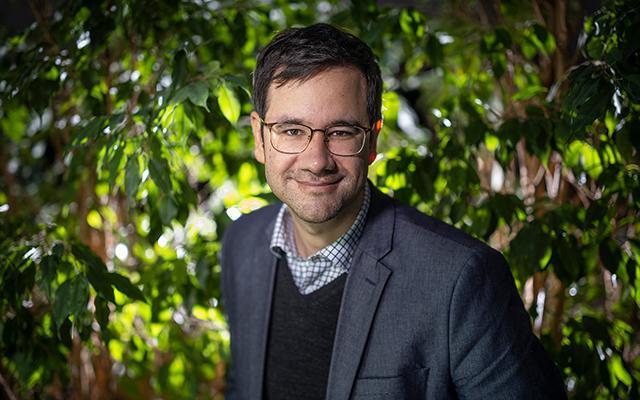
Opinion by Christophe Dessimoz, SIB Executive Director, originally published in Le Temps on 21 July 2026. This translated version is lightly edited.
More press on Switzerland and Geneva as a global hub of life-science data
- TV interview of Christophe Dessimoz, Leman Bleu, 20 July 2026 (French)
- All press coverage of SIB's #GenevaLovesData initiative
AI systems need gold-standard data
Artificial intelligence is currently the focus of much attention. It promises to revolutionize scientific research, medicine, the economy, and even public policy. Yet, behind the prowess of algorithms lies an often-forgotten reality: AI's value depends entirely on the quality of the data that feeds it.
More press on Switzerland and Geneva as a global hub of life-science data
- TV interview of Christophe Dessimoz, Leman Bleu, 20 July 2026 (French)
- All press coverage of SIB's #GenevaLovesData initiative
This question is particularly crucial when it comes to scientific data. Data are essential for understanding the evolution of diseases, monitoring environmental changes, accelerating discoveries, and informing policy decisions. If these data are incomplete, biased, or of poor quality, artificial intelligence systems will produce unreliable results. Conversely, robust, well-documented, and accessible data enable reproducible and trustworthy analyses.
Switzerland and Geneva’s strategic opportunity to shape trustworthy AI
It is precisely in this area that Switzerland possesses remarkable strengths. With its scientific excellence, research infrastructure, and tradition of international collaboration, it is among the best-positioned countries to contribute to the development of reliable and responsible AI. Its expertise in managing complex data – particularly in the life sciences, health, and environmental fields – is recognized far beyond its borders.
This position also rests on values that have built the country's reputation: trust, stability, neutrality, and the ability to bring together actors with sometimes divergent interests. In a world where data are becoming a major strategic and geopolitical issue, these qualities constitute a considerable competitive advantage.
The European Conference on Biological Data Science (ECCB26) organized by SIB in late August 2026, with its 1,500 experts from over 60 countries, and the World AI Summit in June 2027, both in Geneva, highlight the role of Switzerland, and Geneva in particular, on this globally important topic. The presence of numerous international organizations, leading academic institutions, and renowned research centres makes it a unique forum for dialogue between science, diplomacy, and innovation. Geneva boasts an ecosystem capable of bridging the gap between scientific advancements and international discussions on data governance and artificial intelligence.
Institutions such as SIB, CERN and the University of Geneva contribute daily to producing and maintaining the data resources essential for research and the development of high-performing and reliable AI systems. Their often-unseen work is nonetheless a crucial condition for tomorrow's innovation, serving the common good.
A unique position in the global AI ecosystem
At a time when many countries are seeking to define their place in the international artificial intelligence ecosystem, Switzerland would benefit from asserting a clear ambition: to become the world capital of trusted scientific data. Not by competing with major technological powers on the volume or size of platforms, but by highlighting what has long been its strength: scientific excellence, quality, reliability, and cooperation.


